United Empire Loyalist
Videos
United Empire Loyalist is an honorific title which was first given by the 1st Lord Dorchester, the governor of Quebec and governor general of the Canadas, to American Loyalists who resettled in Britis
Depiction of Loyalist refugees on their way to the Canadas during the American Revolution.

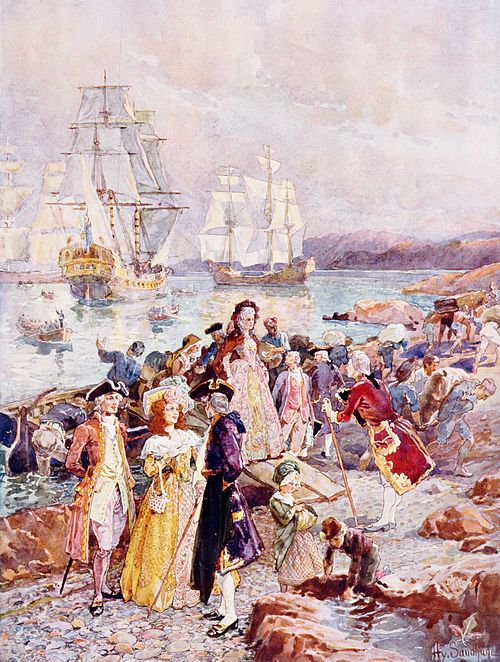
The Coming of the Loyalists by Henry Sandham, showing a romanticised view of the Loyalists' arrival in New Brunswick.

1788 illustration of a Black woodcutter in Shelburne, Nova Scotia

The Act Against Slavery, 1793, an anti-slavery act passed in Upper Canada. The act was created partially in response to Loyalist refugees who brought slaves with them.
Loyalists were colonists in the Thirteen Colonies of British America who remained loyal to the British crown. Historians have estimated that between 15% and 33% of the population of the colonies were
United Empire Loyalist
…simply Loyalist) is an honorific title which was first given by the 1st Lord Dorchester, the governor of Quebec and governor general of the Canadas, to American Loyalists who resettled in British North America during or after the American Revolution. At that time, the demonym Canadian or Canadien was used by the descendants…

Copy of Reception of the American Loyalists by Great Britain in the Year 1783 by Benjamin West, depicting Britannia taking in exiled Loyalists

William Franklin

A jury finding from Kentucky County, Virginia, in July 1780, confiscating lands of two men adjudged to be British subjects. Daniel Boone was listed as a member of the jury.

Johnson Hall, seat of Sir John Johnson in the Mohawk Valley