Ur
Videos
Ur was a major Sumerian city-state in ancient Mesopotamia, located at the site of modern Tell el-Muqayyar in Dhi Qar Governorate, Iraq. Although Ur was a coastal city near the mouth of the Euphrates o
The name 𒋀𒀊𒆠 URIM5KI for "Country of Ur" on a seal of King Ur-Nammu


Lizard-headed nude woman nursing a child, from Ur, Ubaid period, c. 4500–4000 BC; Iraq Museum

Enthroned King Ur-Nammu (c. 2047–2030 BC)
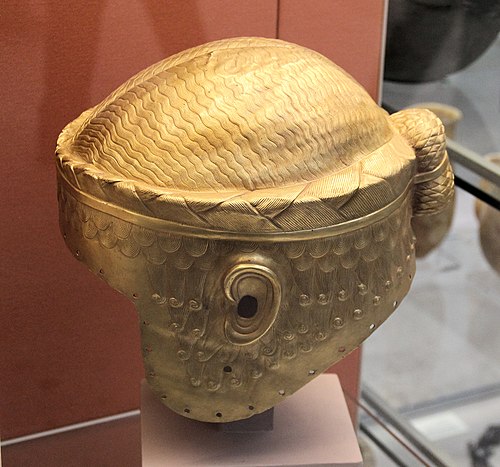
Gold helmet of King of Ur I Meskalamdug, c. 2600–2500 BC
Ur of the Chaldees
Videos
Ur Kasdim, commonly translated as Ur of the Chaldees, is a city mentioned in the Hebrew Bible as the birthplace of Abram, the patriarch of the Israelites and the Ishmaelites. In 1862, Henry Rawlinson
Ur
…The demise of Ur was perhaps owing to drought, changing river patterns, and the silting of the outlet to the Persian Gulf. Ur is possibly the city of Ur of the Chaldees mentioned in the Book of Genesis as the birthplace of the Jewish patriarch Abraham, traditionally believed to have lived some time in the 2nd millennium…

The ruins of Ur, Iraq, the current scholarly consensus for the city of Ur Kaśdim

Abraham's pool heritage site near Urfa, Turkey, an alternative candidate city for Ur Kaśdīm