Vamana
Videos
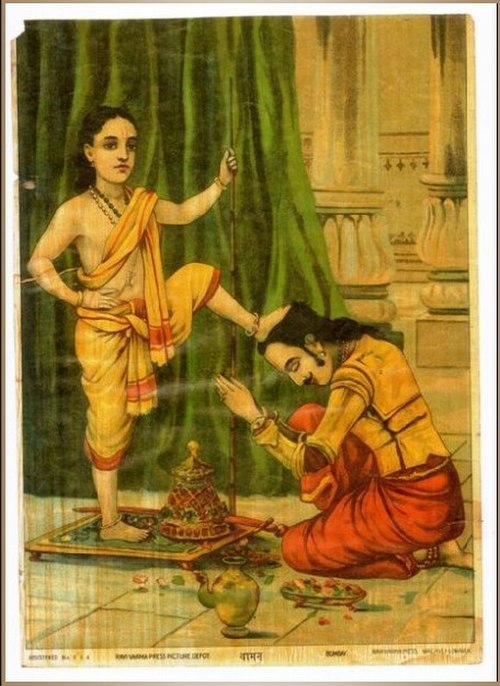
Vamana, also known as Trivikrama, Urukrama, Upendra, Dadhivamana, Ulagalanthan and Balibandhana, is an avatar of the Hindu deity Vishnu. He is the fifth avatar of Vishnu and the first Dashavatara in t
Vamana Avatar by Raja Ravi Varma

A yajna

Rigveda page in Sanskrit

Vishnu dwarf incarnation (Vamana), Pala period, Bengal – BHU Museum
Parashurama
Videos
Parashurama, also referred to as Rama Jamadagnya, Bhargava Rama, and Virarama, is the sixth avatar among the Dashavatara of the preserver god Vishnu in Hinduism. He is described as one of the Chiranji
Vamana
…the fourth listed (occurring in the tenth Treta Yuga) is Dattatreya, the fifth (fifteenth Treta Yuga) is Mandhatr, the sixth (nineteenth Treta Yuga) is Parashurama, and the seventh (twenty-fourth Treta Yuga) is Ram. Other incarnations following Rama have not been listed here. Other details include: The sons of…

Parashuram by Raja Ravi Varma

Painting in Sri Bhargavaraghaviyam. Painting depicting the court of King Janaka.

Parashurama, surrounded by settlers, commanding Varuna, god of the waters to recede to make land known as 'Parashurama Kshetra' from Gokarna to Kanyakumari for the Brahmins

Parashurama with his axe (two representations)