Varangian runestones
Videos
The Varangian Runestones are runestones in Scandinavia, primarily in Sweden, that mention voyages to the East or the Eastern route, or to more specific eastern locations such as Garðaríki in Eastern E
Runestone U 153


Runestone U 154

Runestone U 209

Runestone U 283 in a 17th-century drawing
Varangian Guard
Videos
The Varangian Guard was an elite unit of the Byzantine army from the 10th to the 14th century who served as personal bodyguards to the Byzantine emperors. The Varangian Guard was known for being prima
Varangian runestones
…many additional runestones in Scandinavia that talk of eastward voyages such as the Greece Runestones, Italy Runestones, and inscriptions left by the Varangian Guard. Other runestones that deal with Varangian expeditions include the Serkland Runestones (dealing with expeditions to the Middle East) and the Ingvar…
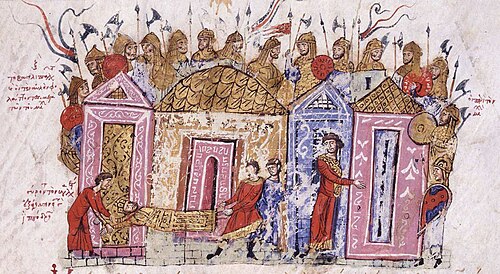
Depiction of the Varangian Guard (above) in the 11th century chronicle of John Skylitzes

An illumination of a scene from the Skylitzes Chronicle, depicting a Thracesian woman killing a Varangian who tried to rape her, whereupon his comrades praised her and gave her his possessions.

Seal of Michael, Grand Interpreter (megas diermeneutes) of the Guard

Piraeus Lion drawing of curved lindworm. The runes on the lion tell of Swedish warriors, likely Varangians, mercenaries in the service of the Byzantine (Eastern Roman) Emperor.