Vultee P-66 Vanguard
Videos
The Vultee P-66 Vanguard was a United States Army Air Forces fighter aircraft. It was initially ordered by Sweden, but by the time the aircraft were ready for delivery in 1941, the United States would not allow them to be exported, designating them as P-66s and retaining them for defensive and training purposes. Eventually, a large number were sent to China where they were pressed into service as combat aircraft with mixed results.


Vultee P-66 Vanguards at Karachi Airfield in India on October 25, 1942.

Vultee Vanguard 3-view drawing from L'Aerophile May 1940
The Republic of China Air Force (ROCAF) was officially formed by the Kuomintang (KMT) after the establishment of the Aviation Ministry in 1920. As tensions mounted between China and Imperial Japan in the 1930s, air units from the Chinese warlords, including those from the Guangdong Provincial Air Force, and overseas Chinese aviators, became integrated into the centralized command of the ROCAF, nominally as the Nationalist Air Force of China, and coordinating with the Second United Front to counter the Imperial Japanese invasion and occupation.

A Soviet-made Polikarpov I-16 with Chinese insignia. The I-16 was the main fighter plane used by the Chinese Air Force and Soviet volunteers following the Sino-Soviet Treaty of 1937

Xu Jixiang of the 17th PS, 5th PG, fought against all odds in the debut dogfight against the A6M Zero-fighter, shown here with an I-15bis,

American P-40E Warhawk decorated with the famous sharkmouth nose art that had identified the AVG
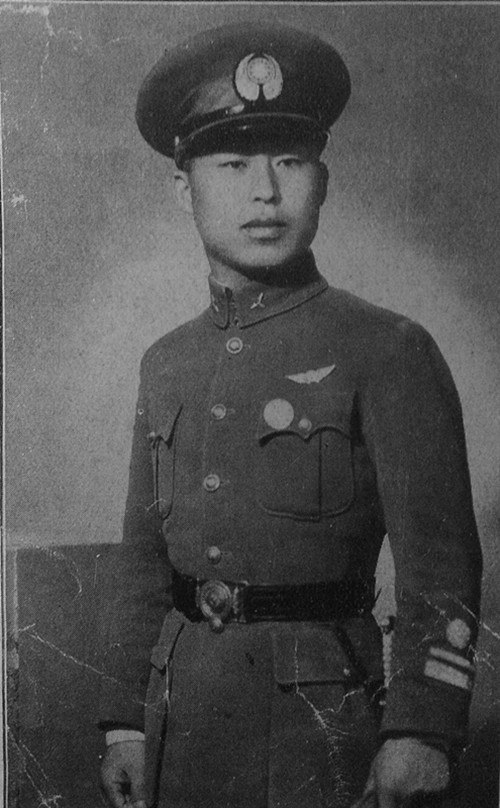
Colonel Kao Chih-hang, commander of the 4th Pursuit Group, had served in the air force of the Manchurian warlord Zhang Zuolin