Whole genome sequencing
Videos
Whole genome sequencing, also known as full genome sequencing or just genome sequencing, is the process of determining the entirety of the DNA sequence of an organism's genome at a single time. This e

Electropherograms are commonly used to sequence portions of genomes.

The first bacterial whole genome to be sequenced was of the bacterium Haemophilus influenzae.

Drosophila melanogaster's whole genome was sequenced in 2000.

Arabidopsis thaliana was the first plant genome sequenced.
Caenorhabditis elegans
Videos
Caenorhabditis elegans is a free-living transparent nematode about 1 mm in length that lives in temperate soil environments. It is the type species of its genus. The name is a blend of the Greek caeno
Whole genome sequencing
…eukaryote to have its whole genome sequenced. The first multicellular eukaryote, and animal, to have its whole genome sequenced was the nematode worm: Caenorhabditis elegans in 1998. Eukaryotic genomes are sequenced by several methods including Shotgun sequencing of short DNA fragments and sequencing of larger DNA clones…

Adult Caenorhabditis elegans

C. elegans under a microscope
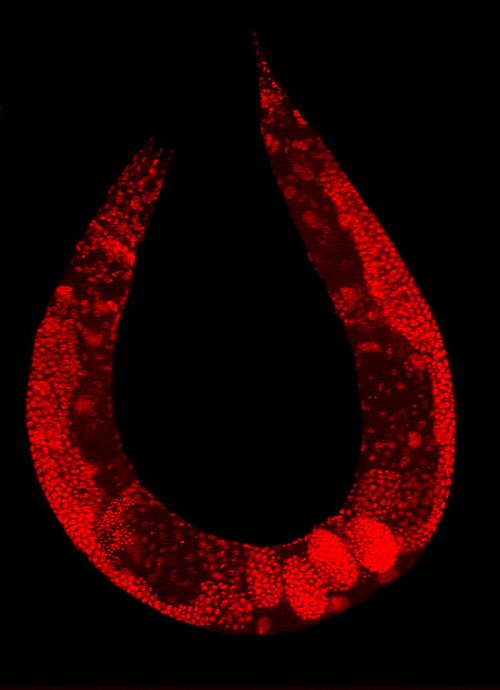
Wild-type C. elegans hermaphrodite stained with the fluorescent dye Texas Red to highlight the nuclei of all cells

C. elegans hermaphrodite