Woodcut
Videos
Woodcut is a relief printing technique in printmaking. An artist carves an image into the surface of a block of wood—typically with gouges—leaving the printing parts level with the surface while remov
The Four Horsemen c. 1496–98 by Albrecht Dürer, depicting the Four Horsemen of the Apocalypse

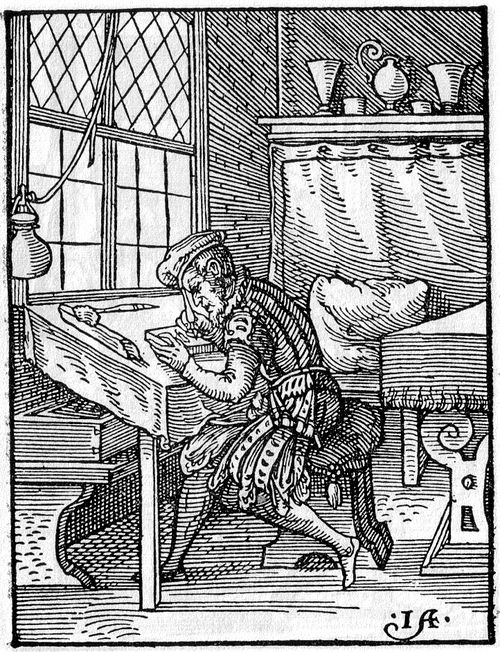
Block Cutter at Work woodcut by Jost Amman, 1568

The Crab that played with the sea, Woodcut by Rudyard Kipling illustrating one of his Just So Stories (1902). In mixed white-line (below) and normal woodcut (above).

Madonna del Fuoco (Madonna of the Fire, c. 1425), Cathedral of Forlì, in Italy
Linocut
Videos
Linocut, also known as lino print, lino printing or linoleum art, is a printmaking technique, a variant of relief printing in which a sheet of linoleum is used for a relief surface. A design is cut in
Woodcut
…prints), as opposed to shin-hanga (新版画, new prints), a movement that retained traditional methods. In the West, many artists used the easier technique of linocut instead. Compared to intaglio techniques like etching and engraving, only low pressure is required to print. As a relief method, it is only necessary…

The Mask by Frank Weitzel, 1930

Using a handheld gouger to cut a design into linoleum for a linocut print

Linocut printing; using a design cut into linoleum to make a print on paper

Wet Afternoon, linocut in four color blocks by Ethel Spowers of the Grosvenor School group, 1930.