Woodrow Wilson and race
Videos
Woodrow Wilson was a prominent American scholar who served as president of Princeton University from 1902 to 1910, as governor of New Jersey from 1911 to 1913, and as the 28th president of the United
Wilson speaking at the dedication ceremony for the Confederate Memorial in Arlington National Cemetery, 1914


World War I draft card, the lower left corner to be removed by men of African background to help keep the military segregated

German propaganda targeting African American troops in World War I

Misquotation from Wilson's History of the American People as reproduced in the film The Birth of a Nation.
Racism in the United States
Videos
Racism has been reflected in discriminatory laws, practices, and actions against racial or ethnic groups throughout the history of the United States. Since the early colonial era, White Americans have
Scars on an enslaved man, Peter, April 2, 1863, Baton Rouge, Louisiana


A group of white men pose for a 1919 photograph as they stand over the body of the Black lynching victim Will Brown before they decide to mutilate and burn them during the Omaha race riot of 1919 in Omaha, Nebraska. Photographs and postcards of lynchings were popular souvenirs in the U.S.

White tenants seeking to prevent Blacks from moving into the housing project erected this sign. Detroit, 1942.
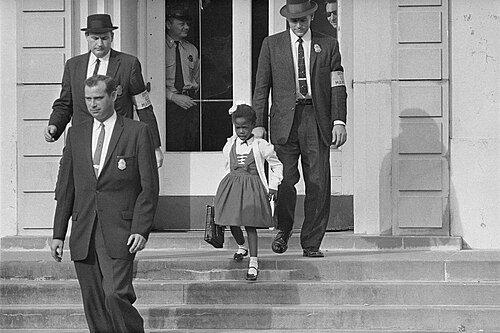
Due to threats and violence against her, U.S. Marshals escorted 6-year-old Ruby Bridges to and from the previously whites only William Frantz Elementary School in New Orleans, 1960. As soon as Bridges entered the school, white parents pulled their children out.