World War I reparations
Videos
Following their defeat in World War I, the Central Powers agreed to pay war reparations to the Allied Powers. Each defeated power was required to make payments in either cash or kind. Because of the f

Avocourt, 1918, one of the many destroyed French villages where reconstruction would be funded by reparations.

Demonstration against the Treaty of Versailles, in front of the Reichstag.

Trains loaded with machinery deliver their cargo in 1920 as reparation payment in kind.

Protests by gymnasts from the Ruhr at the 1923 Munich Gymnastics Festival. The sign on the left reads "The Ruhr remains German". The right placard reads "We never want to be vassals".
The Heavenly Twins was the name assigned to two British delegates, the Judge Lord Sumner and the Banker Lord Cunliffe, during the 1919 Treaty of Versailles negotiations who were to set the terms of th

The Palace of Versailles where the 1919 discussions concerning Germany took place.

Lord Sumner, one of the Heavenly Twins.
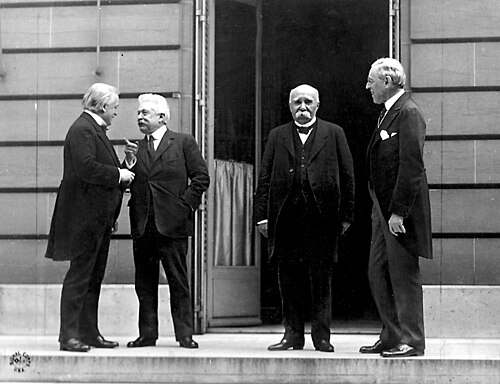
The Council of Four: from left, UK Prime Minister Lloyd George, Italian Prime Minister Orlando, French Prime Minister Clemenceau, and US President Wilson.