Wu experiment
Videos
The Wu experiment was a particle and nuclear physics experiment conducted in 1956 by the Chinese-American physicist Chien-Shiung Wu in collaboration with the Low Temperature Group of the US National B
Chien-Shiung Wu, after whom the Wu experiment is named, designed the experiment and led the team that carried out the test of the conservation of parity in 1956.


The Wu experiment performed at the Bureau of Standards low temperature laboratory, Washington DC, in 1956. The vertical vacuum chamber, containing the cobalt-60, detectors, and field coil, is being placed into a Dewar before being inserted into the large electromagnet in the background, which will cool the radioisotope near absolute zero by adiabatic demagnetization.

Co nuclei emit more beta rays in direction opposite to the right hand rule. The mirror images here are not related by inversion symmetry, contrary to parity conservation.
Tsung-Dao Lee
Videos
Tsung-Dao Lee was a Chinese-American physicist known for his work on parity violation, the Lee–Yang theorem, particle physics, relativistic heavy ion physics, nontopological solitons, and soliton star
Wu experiment
…right. This result was not expected by the physics community, which had previously regarded parity as a symmetry that applied to all forces of nature. Tsung-Dao Lee and Chen-Ning Yang, the theoretical physicists who originated the idea of parity nonconservation and proposed the experiment, received the 1957 Nobel…

Lee in 1956

Chien-Shiung Wu, designer of the Wu experiment that violated parity
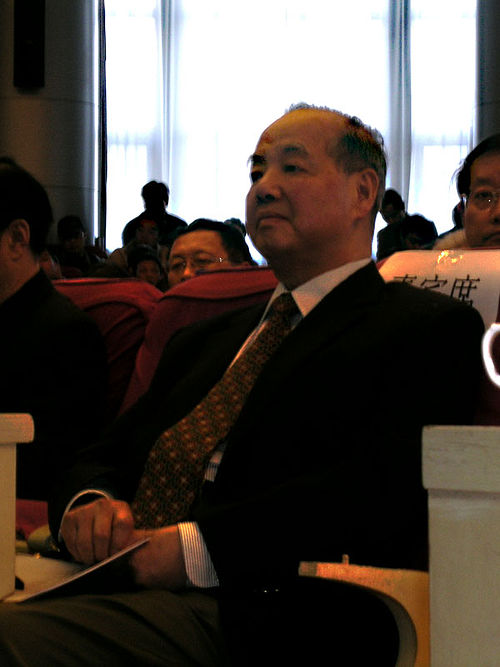
Tsung-Dao Lee at a conference in Tsinghua University, 2006