X-ray tube
Videos
An X-ray tube is a vacuum tube that converts electrical input power into X-rays. The availability of this controllable source of X-rays created the field of radiography, the imaging of partly opaque o

In this dental X-ray tube the heated cathode is on the left. Centre is the anode which is made from tungsten and embedded in the copper sleeve.

Crookes X-ray tube from early 1900s. The cathode is on the right, the anode is in the center with attached heat sink at left. The electrode at the 10 o'clock position is the anticathode. The device at top is a 'softener' used to regulate the gas pressure.

typical rotating anode X-ray tube

Two high voltage rectifier tubes capable of producing X-rays
X-ray
Videos
An X-ray is a form of high-energy electromagnetic radiation with a wavelength shorter than those of ultraviolet rays and longer than those of gamma rays. Roughly, X-rays have a wavelength ranging from
X-ray tube
…An X-ray tube is a vacuum tube that converts electrical input power into X-rays. The availability of this controllable source of X-rays created the field of radiography, the imaging of partly opaque objects with penetrating radiation…

Natural color X-ray photogram of a wine scene. Note the edges of hollow cylinders as compared to the solid candle.
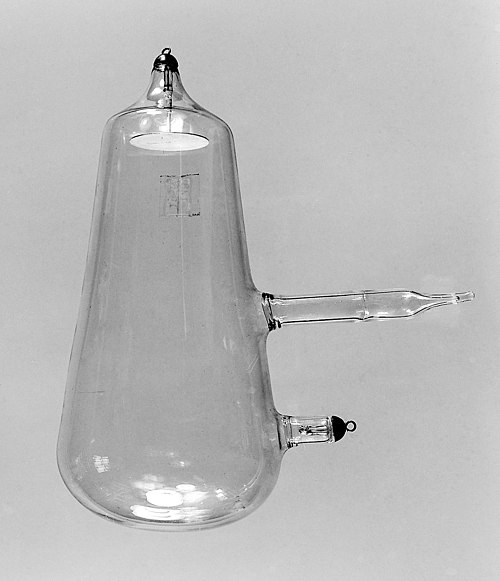
Example of a Crookes tube, a type of discharge tube that emitted X-rays

Wilhelm Röntgen
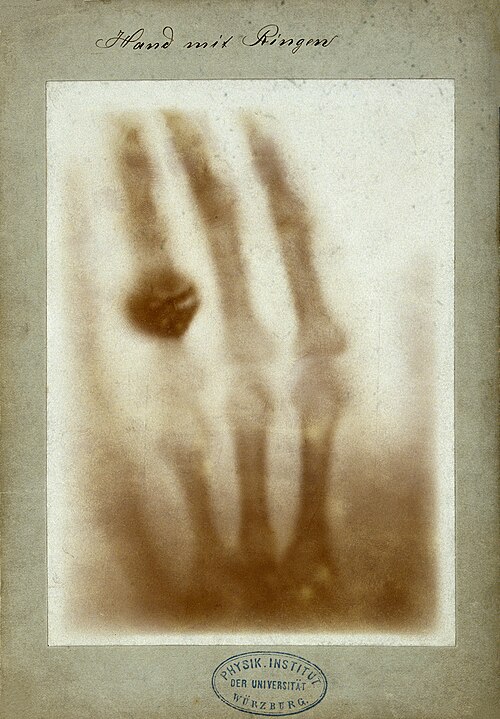
Hand mit Ringen (Hand with Rings): print of Wilhelm Röntgen's first "medical" X-ray, of his wife's hand, taken on 22 December 1895, and presented to Ludwig Zehnder of the Physik Institut, University of Freiburg, on January 1, 1896