Yakusha-e
Videos
Yakusha-e, often referred to as "actor prints" in English, are Japanese woodblock prints or, rarely, paintings, of kabuki actors, particularly those done in the ukiyo-e style popular through the Edo p
Sharaku; The Kabuki actors Bando Zenji (on the left, in the role of Benkei) and Sawamura Yodogoro II (on the right, as Yoshitsune), in the play Yoshitsune Senbon Zakura (Yoshitsune of the Thousand Cherry-Trees); 1794, fifth month.

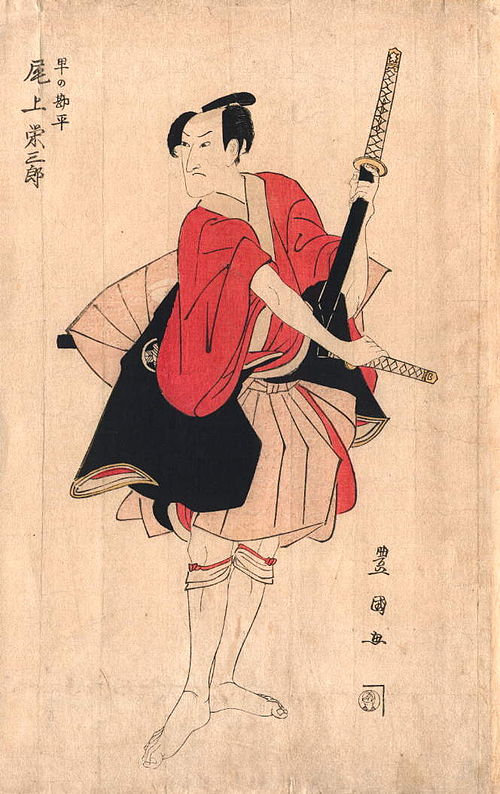
Utagawa Toyokuni; The Kabuki actor Onoe Eisaburo I; c. 1800

Yoshiiku Kabuki Actors Greeting the Lunar New Year 1863
Ukiyo-e
Videos
Ukiyo-e is a genre of Japanese art that flourished from the 17th through 19th centuries. Its artists produced woodblock prints and paintings of such subjects as female beauties; kabuki actors and sumo
Yakusha-e
…often referred to as "actor prints" in English, are Japanese woodblock prints or, rarely, paintings, of kabuki actors, particularly those done in the ukiyo-e style popular through the Edo period (1603–1867) and into the beginnings of the 20th century. Most strictly, the term yakusha-e refers solely to portraits…
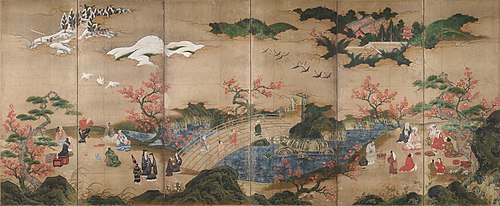
Maple Viewing at Takao (mid-16th century) by Kanō Hideyori is one of the earliest Japanese paintings to feature the lives of the common people.

Tokugawa Ieyasu established his government in the early 17th century in Edo (modern Tokyo).Portrait of Tokugawa Ieyasu, Kanō school painting, Kanō Tan'yū, 17th century
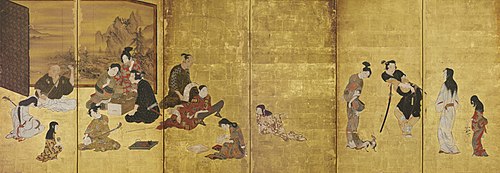
The Hikone screen may be the oldest surviving ukiyo-e work, dating to c. 1624–1644.

Early woodblock print, Hishikawa Moronobu, late 1670s or early 1680s