Yamantaka
Videos
Yamāntaka or Vajrabhairava is the "destroyer of death" deity of Vajrayana Buddhism. Sometimes he is conceptualized as "conqueror of the lord of death". Of the several deities in the Buddhist pantheon
Yamantaka is the "destroyer of death" deity in Vajrayana Buddhism, above riding a water buffalo.


Ming dynasty (1368 - 1644) Shuilu ritual painting of Yamāntaka (Dàwēidé Míngwáng), one out of a set depicting the Ten Wisdom Kings, at Baoning Temple[zh] in Shanxi, China.

Yamāntaka in a Beijing Buddhist temple.

Carved cliff relief of Yamāntaka, one out of a set depicting the Ten Wisdom Kings, at the Dazu Rock Carvings in Chongqing, China. 7th century.
Vajrayana
Videos
Vajrayāna, otherwise known as Mantrayāna, Guhyamantrayāna, Tantrayāna, Indo-Tibetan Buddhism, Tantric Buddhism, and Esoteric Buddhism, is a vehicle of the Mahāyāna Buddhist tradition that emphasizes e
Yamantaka
…Yamāntaka or Vajrabhairava is the "destroyer of death" deity of Vajrayana Buddhism. Sometimes he is conceptualized as "conqueror of the lord of death". Of the several deities in the Buddhist pantheon named Yamāntaka, the most…
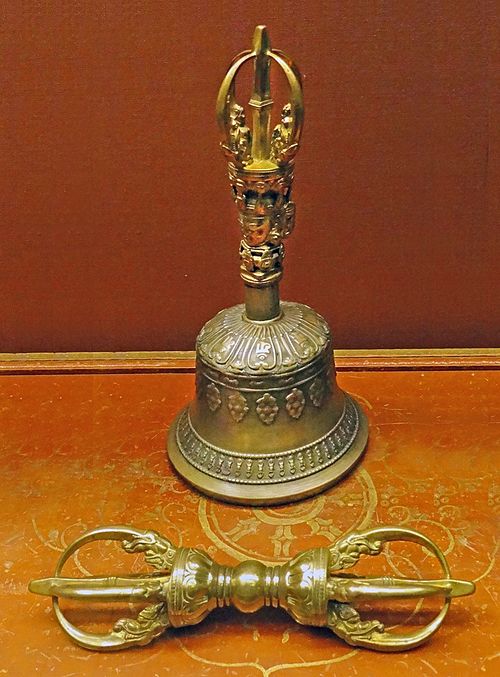
A vajra and bell (ghanta), which are classic ritual symbols of Vajrayāna Buddhism

Mahasiddhas, Palpung monastery. Note the figure of the great adept Putalipa at center, seated in a cave and gazing at an image of the meditational deity Samvara and the figure at the bottom left holding a skull-staff (khaṭvāṅga) and a flaying knife (kartika).
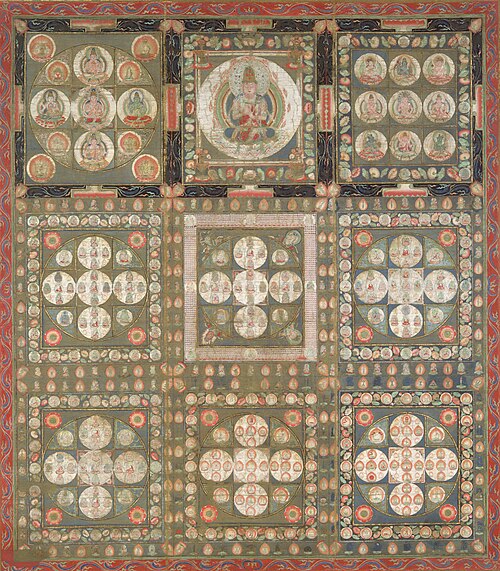
Vajra Realm Mandala, based on the tantric Vajrasekhara Sutra, and symbolizing the final realization of Vairocana Buddha in Shingon

Naked tantrikas dancing and eating from skull cups (kapalas), closeup of a Chakrasamvara mandala