Yayoi period
Videos
The Yayoi period is one of the major historical periods of the Japanese archipelago. It is generally defined as the era between the beginning of food production in Japan and the emergence of keyhole-s
Yoshinogari site reconstruction


Reconstructed Yayoi-style dwellings at Yoshinogari
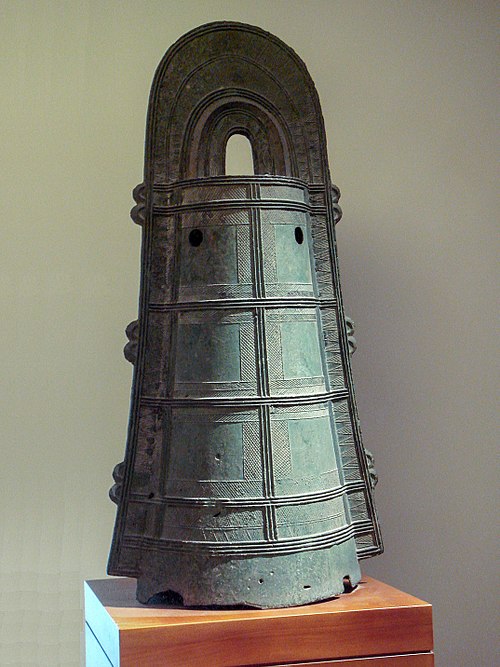
A Yayoi period dōtaku bell, 3rd century AD
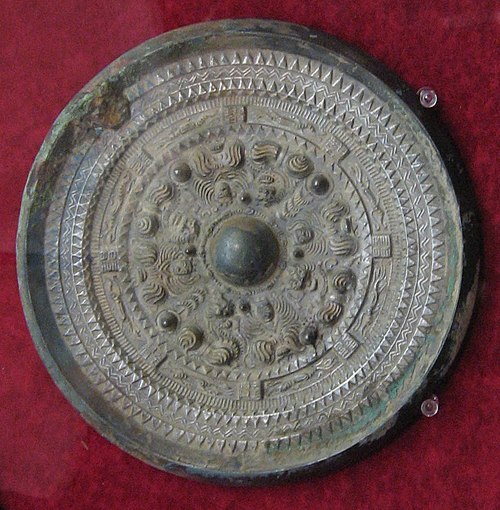
Shinju-kyo bronze mirror excavated in Tsubai-otsukayama kofun, Yamashiro, Kyoto
Kofun period
Videos
The Kofun period is an era in the history of Japan from about 300 to 538, the date of the introduction of Buddhism in Japan, following the Yayoi period. The Kofun period and the subsequent Asuka perio
Yayoi period
…end of the 2nd century, the political entity known as Wa-koku (倭国) had formed. It is generally considered that the Yayoi period transitioned into the Kofun period around the mid-3rd century, although the precise starting point of the Kofun period remains debated among scholars. The name "Yayoi" was given in the…

Kofun-period horse ornaments (British Museum)

Iron tankō armour and helmet, with gilt bronze decoration, 5th century CE (Tokyo National Museum)

Gilded sword hilts, late Kofun period, 6th century

Reconstructed Kofun-era warehouse