Yeomanry
Videos
Yeomanry is a designation used by a number of units and sub-units in the British Army Reserve which are descended from volunteer cavalry regiments that now serve in a variety of different roles.
c. 1798 engraving of a London and Westminster Light Horse trooper


Hertfordshire Yeomanry in the 1890s

An 1804 review of yeomanry troops in Hyde Park, London.
Yeoman
Videos
The yeoman social class of medieval and early modern England ranked between the peasantry and the landed gentry. The class was first documented in mid-14th century England, where it included people wh
Yeomanry
…threat of invasion of the Kingdom of Great Britain was high. To improve the country's defences, Volunteer regiments were raised in many counties from yeomen. While the word "yeoman" in normal use meant a small farmer who owned his land, Yeomanry officers were drawn from the nobility or the landed gentry…

Edith of Wilton, from a 13th-century illuminated manuscript
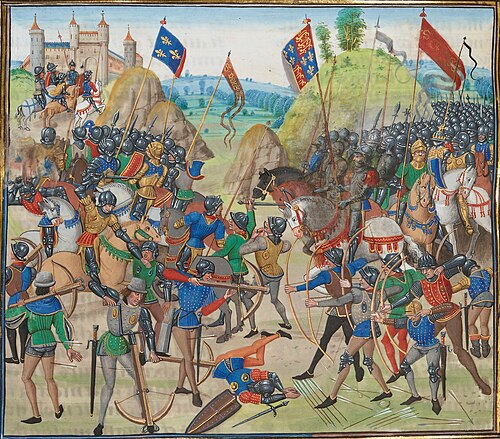
Battle of Crécy, as depicted in a 15th-century illuminated manuscript of Jean Froissart's Chronicles. Both armies are shown stylistically; archers in the foreground. English archers are shown with the legendary longbow, while the Italian mercenaries struggle with their crossbows.
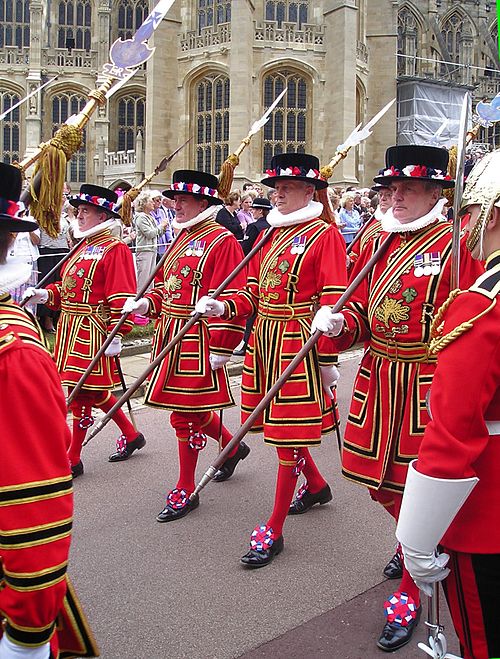
Yeomen of the Guard in procession. Their uniform has remained relatively unchanged since the Tudor dynasty. The spears are carried in remembrance of their role in protecting Henry Tudor at Bosworth Field.

Seal of the port of Dunwich. This is an earlier ship (note the side rudder) which has been retro-fitted with a forecastle, aftcastle, and topcastle. The forecastle and aftcastle platforms are tall enough so men can stand underneath them.